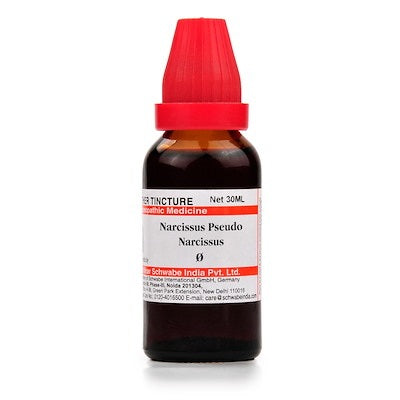
Narcissus Pseudo Narcissus Homeopathy Tincture for Persistent Cough, Bronchitis, Coryza
Narcissus Pseudo Narcissus Homeopathy Tincture for Persistent Cough, Bronchitis, Coryza - 30ml is backordered and will ship as soon as it is back in stock.
Couldn't load pickup availability
Description
Description
Narcissus Pseudo-Narcissus Mother Tincture (Q): Homeopathic Relief for Bronchial Cough, Coryza, Frontal Headache, Nausea & Damp-Weather Skin Eruptions
Also known as: Daffodil (Narcissus), Nasturtium, Nasturtium Aquaticum
Narcissus Pseudo-Narcissus is a classical homeopathic remedy known for its marked action on the respiratory system, skin, and autonomic nervous system. It produces characteristic effects such as dryness of the mouth, altered skin secretions, pupillary changes, and variable cardiac activity depending on the stage of plant extraction.
In its primary action, it may cause dryness of the mouth, suppression of skin secretions, dilation of pupils, increased pulse rate, and weakened heart contractions. In contrast, preparations derived from bulbs after flowering tend to produce profuse salivation, increased perspiration, contraction of pupils, slight faintness, and nausea.
Clinically, it is indicated in cough, bronchial inflammation, coryza, and frontal headaches, especially when associated with nasal irritation. It is also useful in cases of nausea with vomiting, respiratory congestion, and inflammatory conditions of the airways.
Narcissus Pseudonarcissus as per Boericke Materia Medica
This remedy is noted for nausea followed by violent vomiting and diarrhea. According to classical sources (including The Lancet), the alkaloid content of daffodil bulbs exhibits differing physiological effects depending on whether it is extracted before or after flowering.
-
Before flowering:
Causes dryness of mouth, suppression of skin secretions, dilated pupils, accelerated pulse, and weakened cardiac contractions. -
After flowering:
Leads to copious salivation, increased skin secretion, contracted pupils, mild pulse relaxation, faintness, and nausea.
Respiratory System:
A valuable remedy for persistent cough, bronchitis, coryza, and frontal headache. It has been used in the convulsive stage of whooping cough, where coughing is continuous and exhausting.
Skin:
Produces erythematous eruptions of papular, vesicular, or pustular nature. Skin symptoms are characteristically aggravated in wet or damp weather.
Key Clinical Indications
-
Persistent cough and bronchitis
-
Coryza with frontal headache
-
Whooping cough (convulsive stage)
-
Nausea, vomiting, and diarrhea
-
Papular, vesicular, and pustular skin eruptions
-
Skin aggravation in wet weather
Dosage
Dosage of single homeopathic medicines varies according to the condition, age, sensitivity, and constitutional response of the individual. In some cases, remedies may be prescribed as 3–5 drops, 2–3 times daily, while in others they may be administered weekly or at longer intervals.
Always follow a qualified homeopathic physician’s guidance for safe and effective use.
Narcissus Pseudo Narcissus Homeopathy Tincture for Persistent Cough...